Inca Trail during the rainy season: Why rain doesn’t have to ruin your adventure!

9 September, 2026

Inca Trail during the rainy season: Why rain doesn’t have to ruin your adventure

Inca Trail permits sell out incredibly quickly every year. Especially for the period from May through September — Peru’s dry season and therefore the high season — it is wise to arrange your permits as much as 6 to 9 months in advance.

But what is it actually like to hike the famous Inca Trail to Machu Picchu during the rainy season? Is the rain a major inconvenience, or does the wet weather actually make the experience even more mystical?

Those looking for permits for November, December or January will notice that there is often still plenty of availability during these months. In fact, November and December are the last months in 2026 for which we still have permits available. So this is a great opportunity to head to Machu Picchu this year — as long as you don’t mind a little rain. 😉

This raises an interesting question: are these months actually a hidden gem for hiking the Inca Trail, or is it better to wait another year if your preferred travel period is sold out?

When is the rainy season on the Inca Trail?

The rainy season in Peru generally starts around October and continues through March. January and March, in particular, are known as the wettest months.

In February, both the 2-day and 4-day Inca Trail are closed for maintenance of the trails and facilities along the route. So if you want to hike the Inca Trail during the rainy season, you have five months to choose from: October, November, December, January and March.

But don’t let the words rainy season put you off. It certainly doesn’t mean that you will spend four days walking through the rain non-stop.

The weather in the Andes is difficult to predict. A day can start with a perfectly clear blue sky, only for the mountains to disappear behind a thick layer of clouds half an hour later. A little while after that, the sun may break through again as if nothing ever happened.

That is exactly what makes hiking in the Andes so special. At the same time, it is important to be prepared for prolonged periods of rain. You may well have a day when the rain barely lets up. Good preparation and a smart packing list are therefore especially important during the rainy season.

What is it like to hike the Inca Trail in the rain?

Hiking the Inca Trail during the rainy season definitely has its advantages and disadvantages. Let’s start with the disadvantages — so we can end on a positive note. 😉

Because, let’s be honest: hiking in dry weather is naturally more comfortable. When it rains for hours, your clothes gradually get wetter and the Trail slowly turns into a slippery challenge. And perhaps the most annoying thing of all: wet shoes. Wet feet are not only uncomfortable, but can also make you more prone to blisters. And when you are hiking for several days in a row, that is definitely something you would rather avoid.

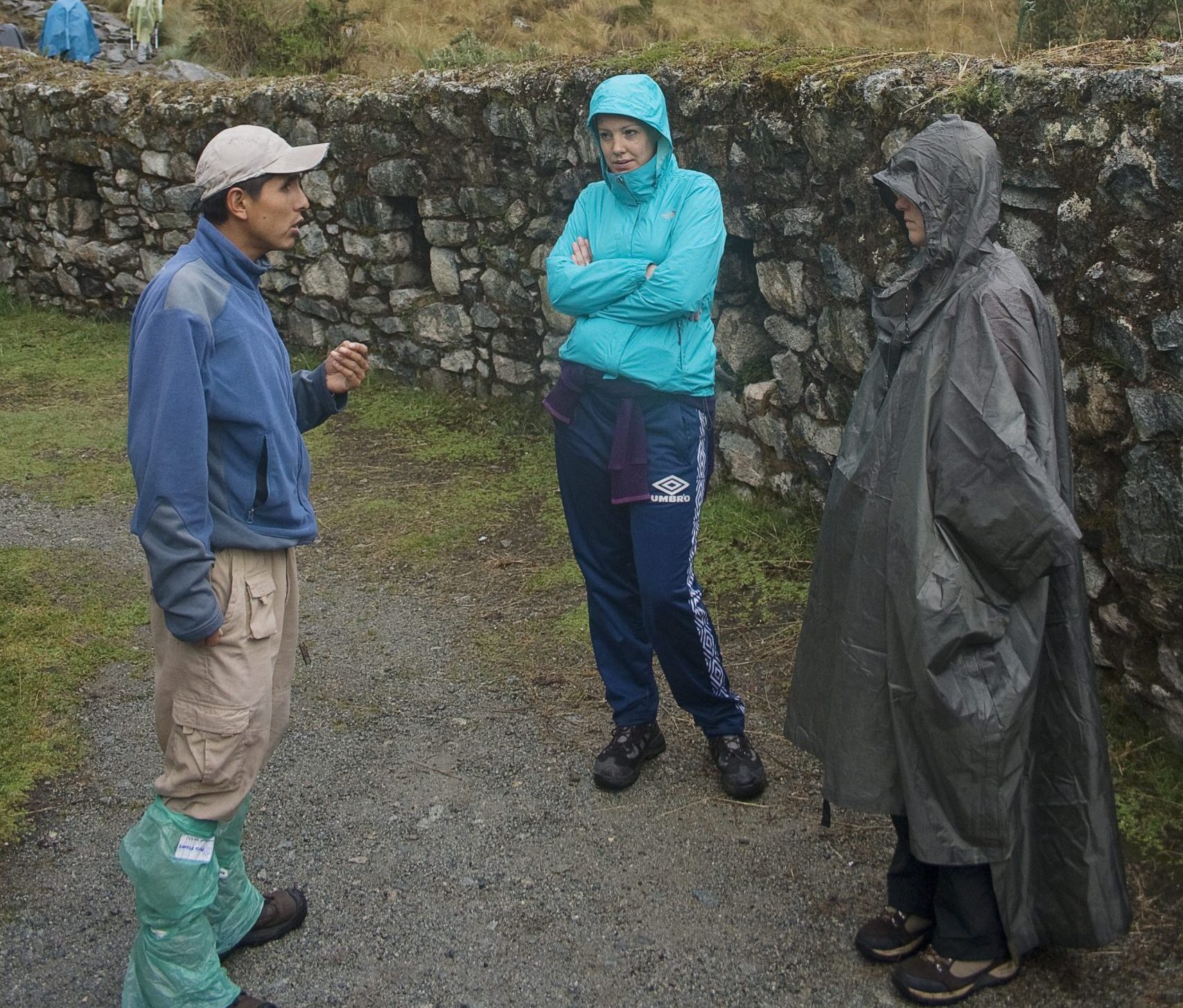
Jorge’s tip: wear garbage bags or sturdy plastic bags over your shoes and secure them with an elastic band to keep your feet as dry as possible. It may not look particularly glamorous, but during a long day of hiking, you’ll suddenly be very happy you did it. 😉

If you hike the Inca Trail during the rainy season, it is therefore quite possible that you will have an entire day of rain. Make sure your clothing and equipment are prepared for this. A good rain jacket and waterproof protection for your luggage are definitely not unnecessary luxuries.

Rain and slippery stones

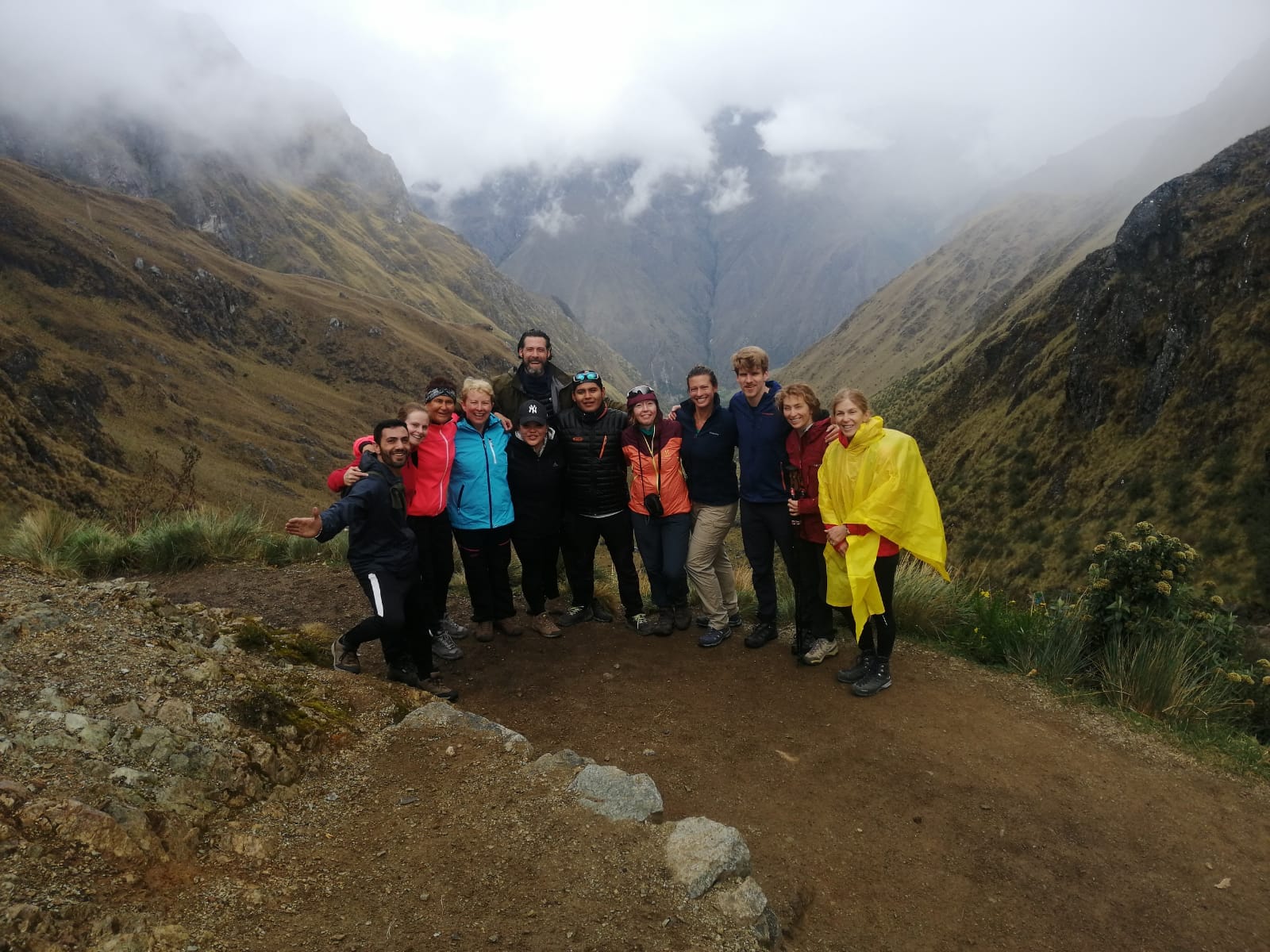
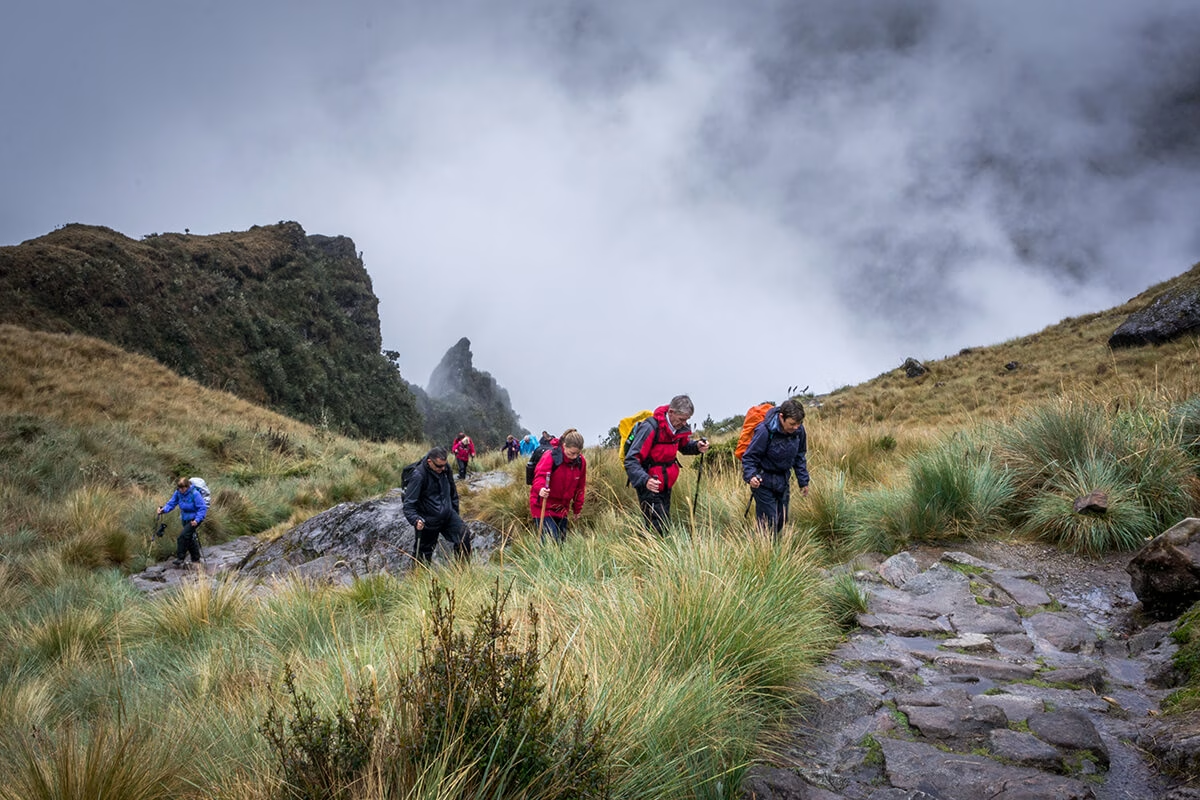
On Day 2, after Dead Woman’s Pass, a long descent awaits you, covering hundreds of metres over uneven stones and rocks. It is a beautiful section of the route, but when it rains, the character of the Trail changes quite dramatically. The stones become more slippery and every step requires just a little more attention. Your pace will naturally slow down, and especially during the descent, it is important to take your time and walk carefully.

Walkin sticks can be incredibly useful at moments like this. They provide extra support and help you maintain your balance on slippery stones. We rent trekking poles. They are also foldable, so if you don’t need them for a while, you can easily put them away.

Climbing can also feel more challenging in the rain. You are not only dealing with the elevation gain, but also paying attention to where you place your feet and how to maintain your grip. As a result, hiking the Inca Trail during the rainy season can certainly feel more demanding than hiking the same route on a dry, sunny day.

But now we come to the other side of the story. Because rain also brings something truly special with it.

The mist makes everything mysterious

Are you someone who isn’t put off by a little rain and actually enjoys the peace and nature around you? Then hiking the Inca Trail during the rainy season can be surprisingly beautiful.

The Trail is generally quieter, the vegetation is beautifully green, and low-hanging clouds slowly drift between the mountains. Ruins appear and disappear in the mist, and sometimes you feel as though you are walking through a completely different world.

And it is precisely this mist that gives the Inca Trail its mysterious character. The landscape looks spectacular on a sunny day, but when the clouds hang between the mountain peaks, the atmosphere becomes almost magical.

The rainy season can also be particularly interesting for photography. The combination of lush greenery, mist, clouds and the occasional ray of sunshine creates images that you might be less likely to capture during the dry season.
What should you pack for the Inca Trail during the rainy season?

Good preparation is always important when hiking the Inca Trail, but during the rainy season, it may be just a little more important. After all, you never know exactly what the Andes has in store for you. A morning with clear blue skies can easily turn into hours of rain.

That’s why we have put together our ultimate Inca Trail packing list, with everything you need for both the dry and rainy seasons.

Heading out between October and March? Then there are a few items you’ll want to pay extra attention to. Because trust us: a few dry pairs of socks, good rain gear and a waterproof backpack can suddenly make all the difference on a wet day of hiking.

At the very least, make sure you bring:

  • Good hiking shoes with plenty of grip – especially when the stones become wet and slippery;
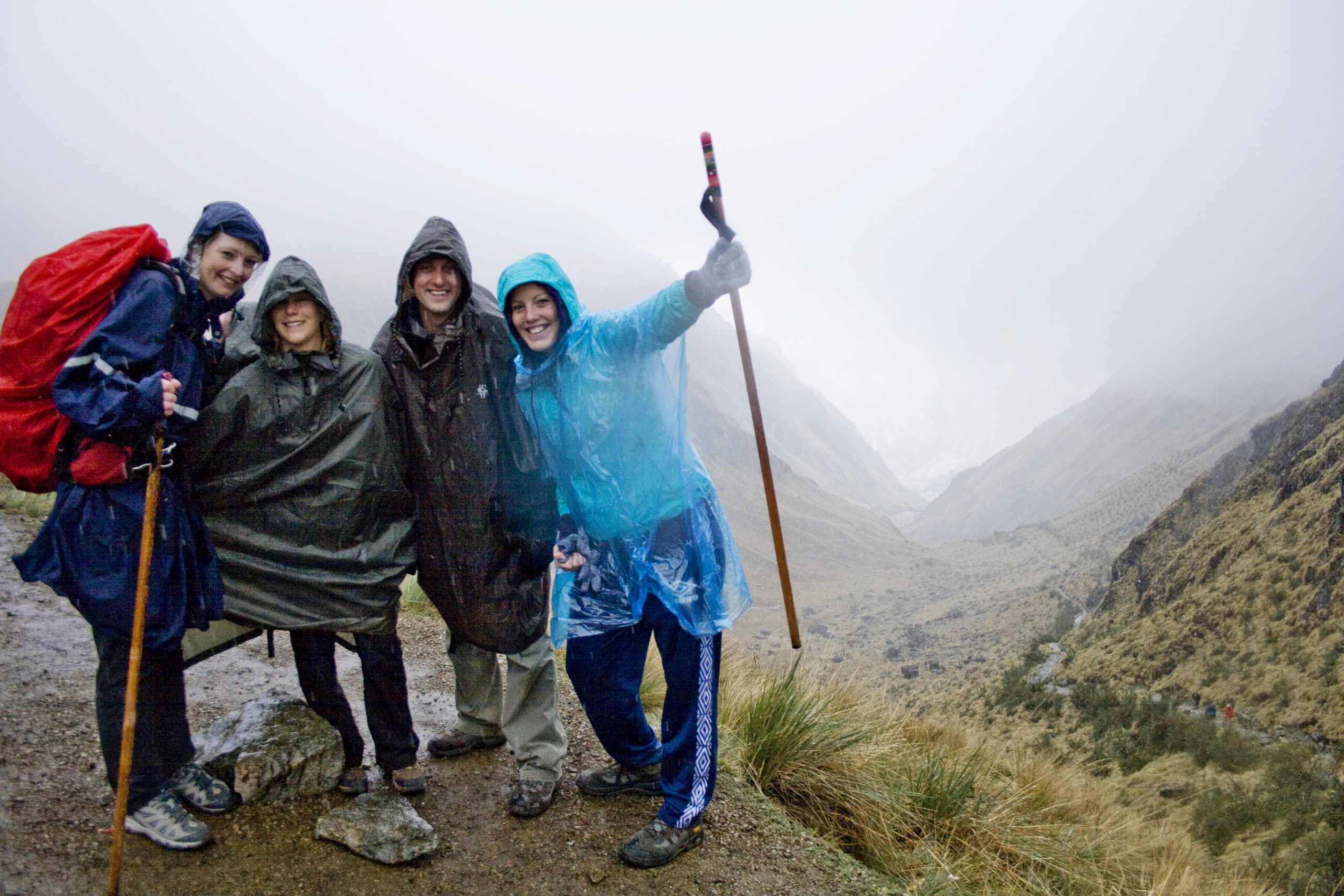
  • A long, truly waterproof rain jacket or sturdy poncho – you don’t want to be soaked after an hour, nor do you want water running down onto your trousers and soaking them. So we definitely wouldn’t recommend a lightweight “festival” poncho;
  • A rain cover for your backpack;
  • Waterproof bags or dry bags – not just for your luggage, but also to provide extra protection for your shoes and other important belongings;
  • Enough hiking socks – because dry feet can make a world of difference;
  • Quick-drying clothing – cotton is not your best friend on a rainy Trail;
  • A warm layer for the evening – once the sun goes down, temperatures can drop quickly;
  • Waterproof protection for your phone and camera – because of course you want to make it home with your photos intact;
  • Trekking poles – especially useful on slippery descents and uneven stones.

A rain cover for your backpack is definitely useful, but think of it as a first line of defence rather than a guarantee that your backpack will stay completely dry. So make sure you also pack your clothes, electronics and other important items separately in waterproof bags. There are also extra-large ponchos available that cover both you and your backpack — very handy!

What do you wish you had known beforehand?

In hindsight, there are always things that make you think: I wish I had known this sooner. These are the lessons we’ve learned from hiking the Inca Trail during the rainy season.

1. You’ll probably get wet at some point

Just accept it. 😉 No matter how well prepared you are, if it rains for hours, you’re going to get wet somewhere. So don’t try to keep every single raindrop away at all costs. Instead, focus on keeping the things that really need to stay dry dry.

2. Dry socks are worth their weight in gold

It sounds like a small detail — until you take off your wet shoes after a long day of hiking. At that point, a pair of dry socks feels almost like a gift. So it’s better to bring an extra pair than to find yourself one pair short.

3. A good rain jacket really does make a difference

There is a big difference between a jacket that is water-resistant and one that will actually keep you dry for hours. So invest in good-quality rain gear. You’ll be grateful when the rain just keeps coming.

4. Protect your electronics

Your phone and camera are probably the things you’ll be most careful with along the way. And rightly so. An unexpected downpour may make for a great memory, but it’s slightly less enjoyable for your electronics.

So don’t simply put your phone and camera in an outside pocket of your backpack. A waterproof case or dry bag/plastic bag is a small effort that can prevent a lot of trouble.

5. The weather can change incredibly quickly

Starting the day under a perfectly blue sky? Don’t assume it will stay dry all day. And the opposite is also true: a rainy morning doesn’t automatically mean you won’t see the mountains for the rest of the day.

In the Andes, the weather can change completely within a short period of time. That’s exactly why wearing layers is so useful.

Would we recommend hiking the Inca Trail during the rainy season?

Yes!

The Inca Trail during the rainy season may not be the easiest version of this famous hike. You’ll have to deal with wet clothes, slippery stones and unpredictable weather. But if you’re prepared for that, you’ll also get something special in return: a greener, more mystical and more adventurous Inca Trail.

And perhaps that is ultimately exactly what a journey to Machu Picchu is supposed to be: not always comfortable, not always predictable, but an adventure that stays with you for a long time.

And one more important thing to know: if there has been too much rain for too long in the natural areas through which the Inca Trail runs, the Peruvian authorities may decide to close the Trail as a precaution. Of course, that’s not ideal when you’ve just managed to secure those highly sought-after permits for this period, but safety comes first. If this happens, we will always work with you to find an alternative Trail.

So are you still unsure about November or December? Don’t let the rainy season automatically put you off. If you set out well prepared, this period can actually offer an incredibly special experience. And for those who still want to hike the Inca Trail in 2026, November and December are the final opportunities of the year.

Read everything about the 4-day Inca Trail in 2026 here

Trails

You want to visit Machu Picchu, but how do you get there? The Incas once had only one option: walking the ancient Trail. Today, you can still follow in their footsteps. And did you know there are even more routes leading to Machu Picchu?

Tours & Day Trips

Besides the Inca Trail and a visit to Machu Picchu, you can enjoy a variety of great day trips from Cusco.