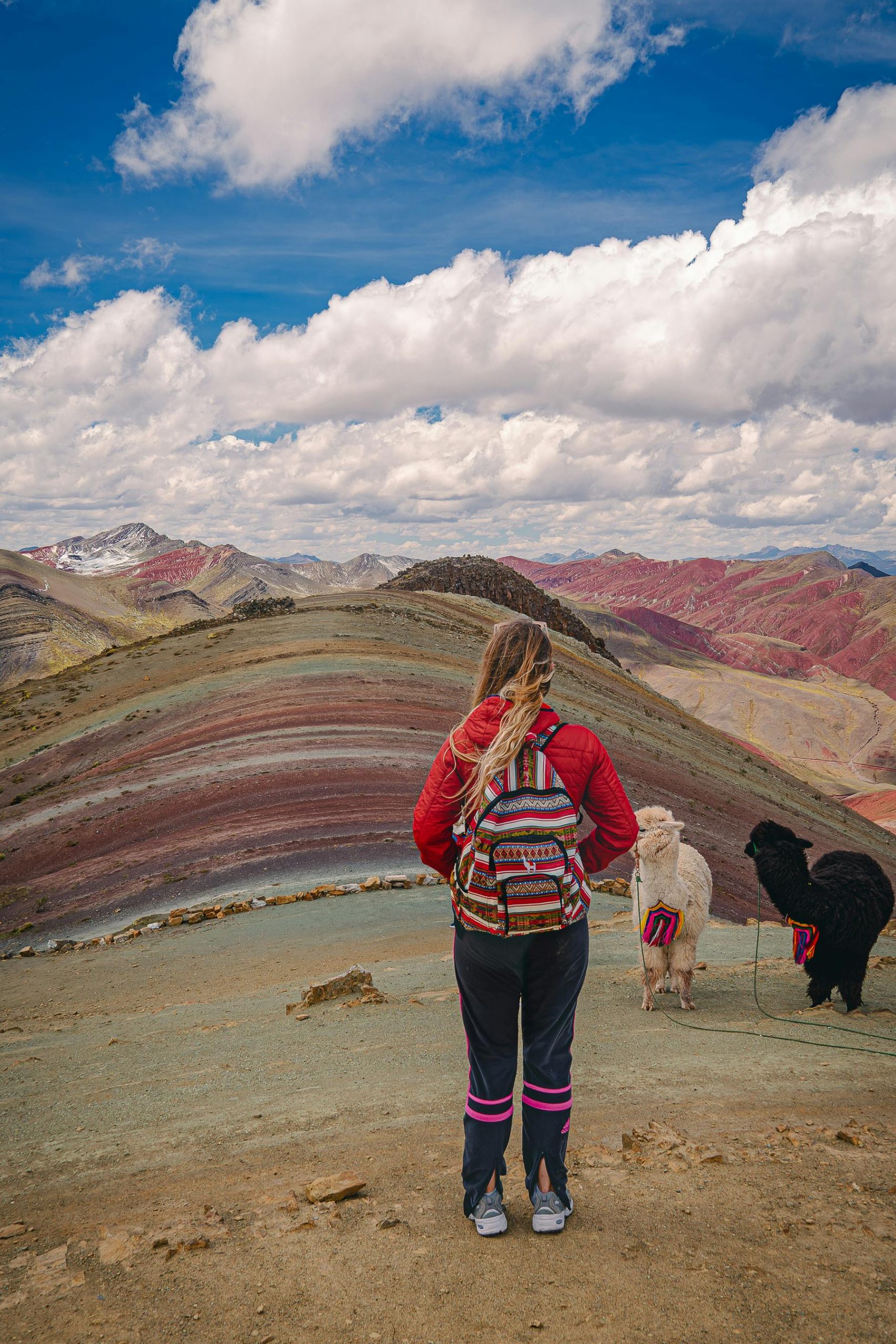
The Must-See in Peru: Rainbow Mountain
If you’re travelling to Peru, a visit to Machu Picchu is of course a must. But there is another place that absolutely deserves a spot on your bucket list: the Rainbow Mountain Tour.
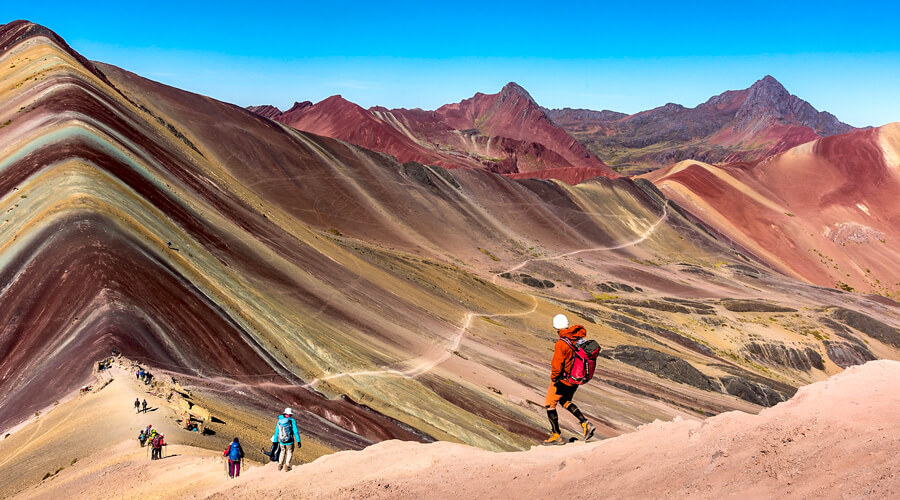
The Peruvians also call Rainbow Mountain “Vinicunca” or “La montaña de los siete colores” (the mountain of seven colours). Every now and then I spot a poster for it in Cusco, showing striped, colourful mountains—and I immediately think: I have to go there!
Completely unprepared, I set off. Bruno (my brother-in-law Jorge’s brother) books the Rainbow Mountain tour for me and tells me I need to be ready at 3 AM (!). I am picked up last by a minibus, and I notice my fellow travellers have unanimously decided to catch a few more minutes of sleep. I quickly realise it’s going to be a tough day and pull my blanket a little tighter.
Breathtaking
After about three hours of driving, we stop for breakfast and a short briefing. Then it’s another 20 minutes to the starting point of the Rainbow Mountain tour. More tourists from other minibuses join us, and we begin the hike together through the valley.
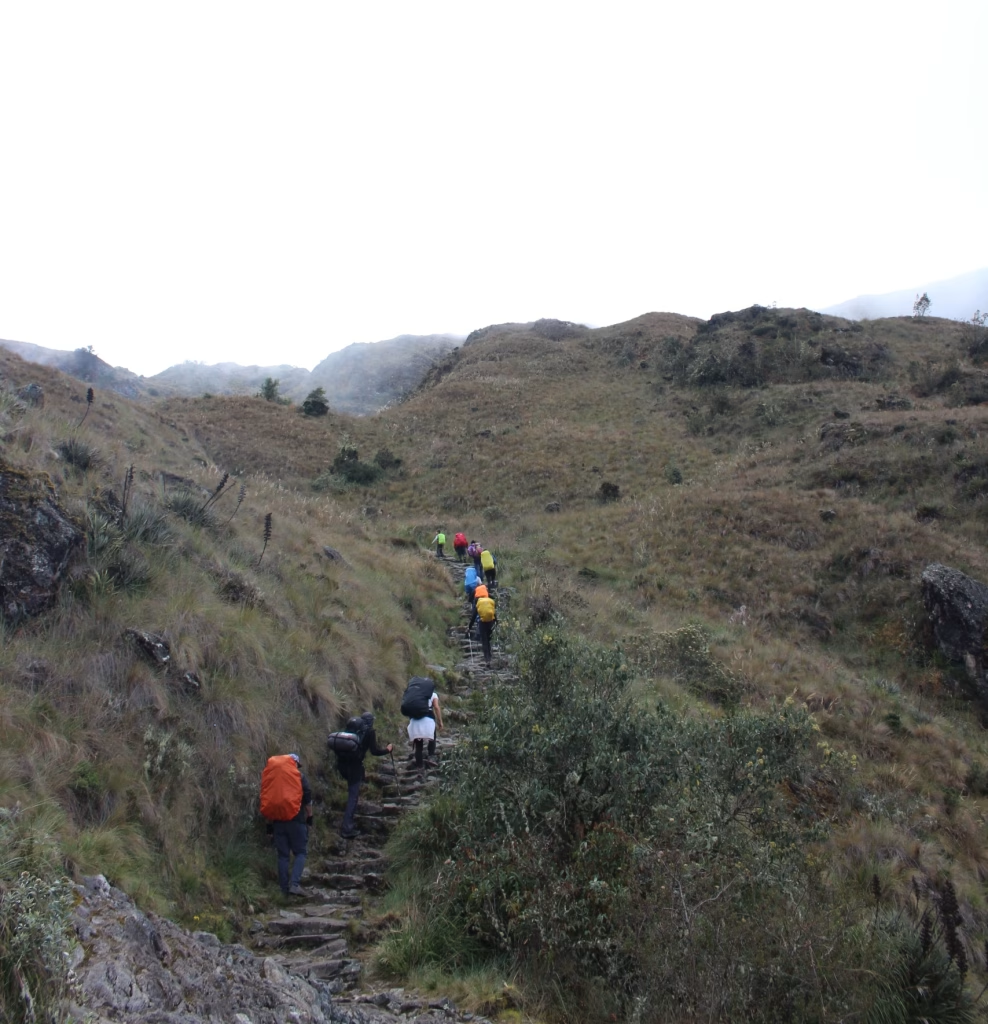
I start off energetically, chatting with other travellers, but soon realise I need every bit of oxygen just to put one foot in front of the other. The others feel the same, and the group naturally falls into a silent procession.
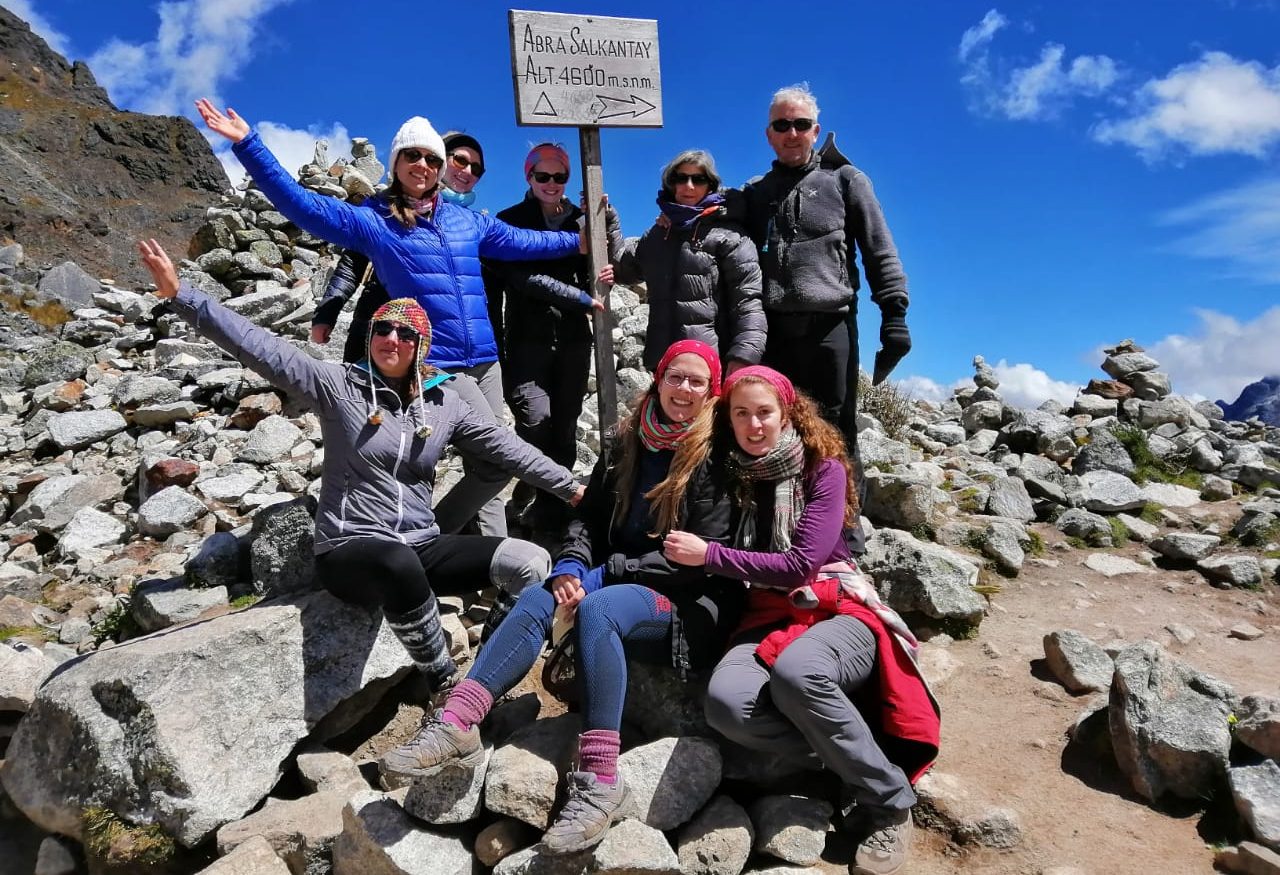
Not surprisingly, breathing becomes difficult quickly, as the starting point of this tour is already at 4,326 meters—higher than the highest pass on the Inca Trail.
Todo recto!
After about 15 minutes of walking, you can choose to continue the hike on horseback for around 70 soles (about €19). I decide to keep walking. After having completed the Inca Trail without issues, I believe I can manage this too.
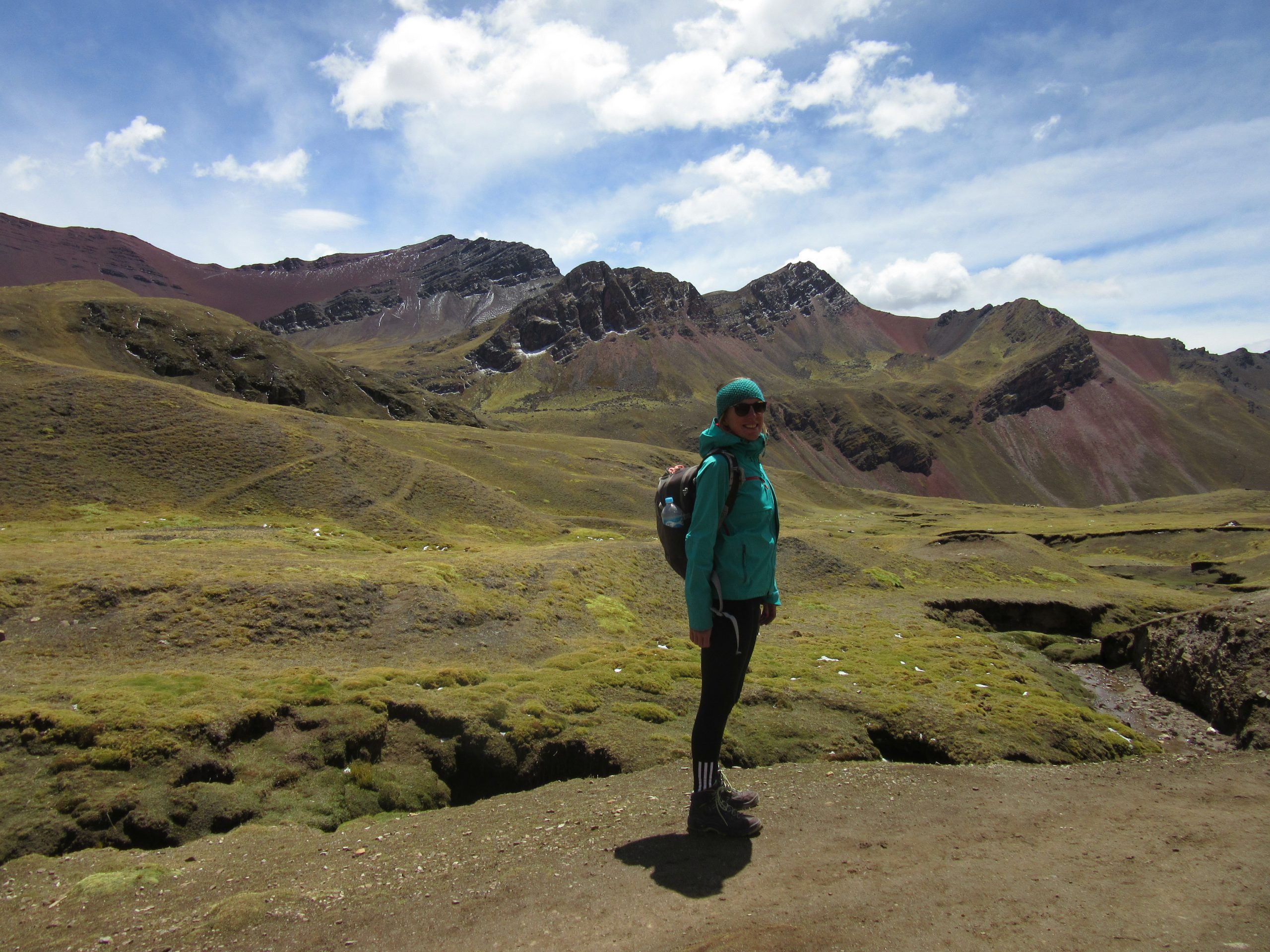
The cold night gives way to sunshine, and layers of clothing come off one by one. The further we walk, the more the colours of the mountains begin to appear. The group of tourists has now stretched into a long line.
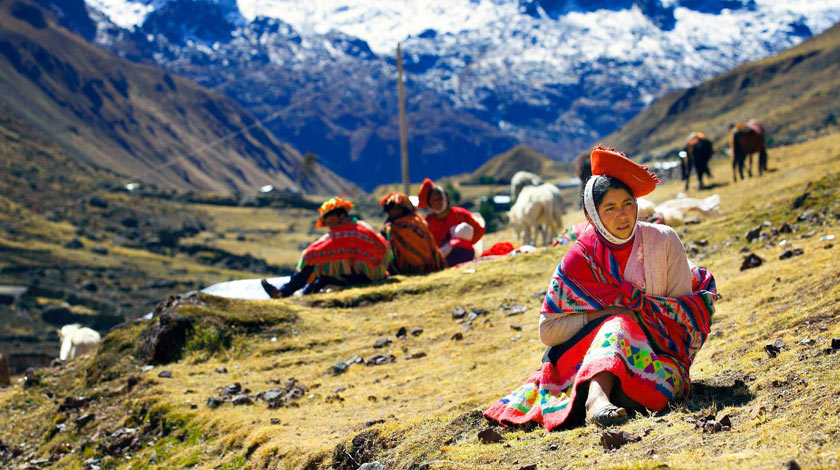
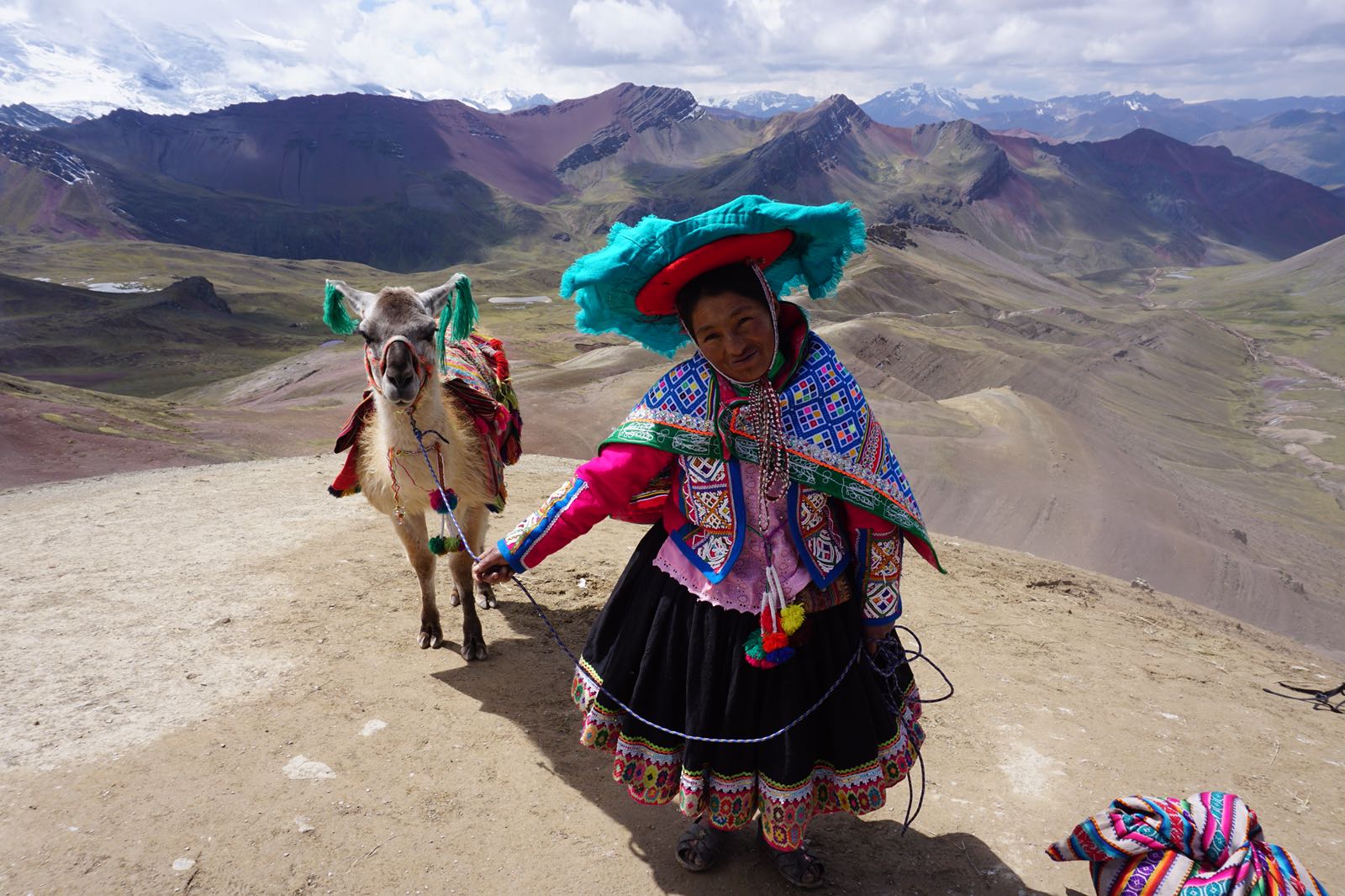
You can’t get lost here—you simply follow the crowd and walk “todo recto” (straight ahead). Around us, alpacas and llamas graze peacefully. Along the way, small tents sell snacks and water, and occasionally you can stop for a bathroom break. These are simple huts with nothing more than a hole in the ground—but honestly, that works just fine!
On Foot or on Horseback
It feels like I’ve stepped into the Wild West. Peruvian cowboys gallop past on both sides of the trail, racing across the mountains on their horses. More and more hikers start to give in, stopping to hire a horse like it’s a taxi. I keep pushing on, but I notice my pace slowing down and every step becoming heavier.
The path itself isn’t even that steep—it’s the altitude that makes me gasp for air. I’m almost there. I’ve been drinking plenty of water, but I still feel a slight headache coming on. The final 100 meters are enough for me to finally accept the offer of a horse. Even though it’s only a short stretch, it feels like it would take me forever on foot.
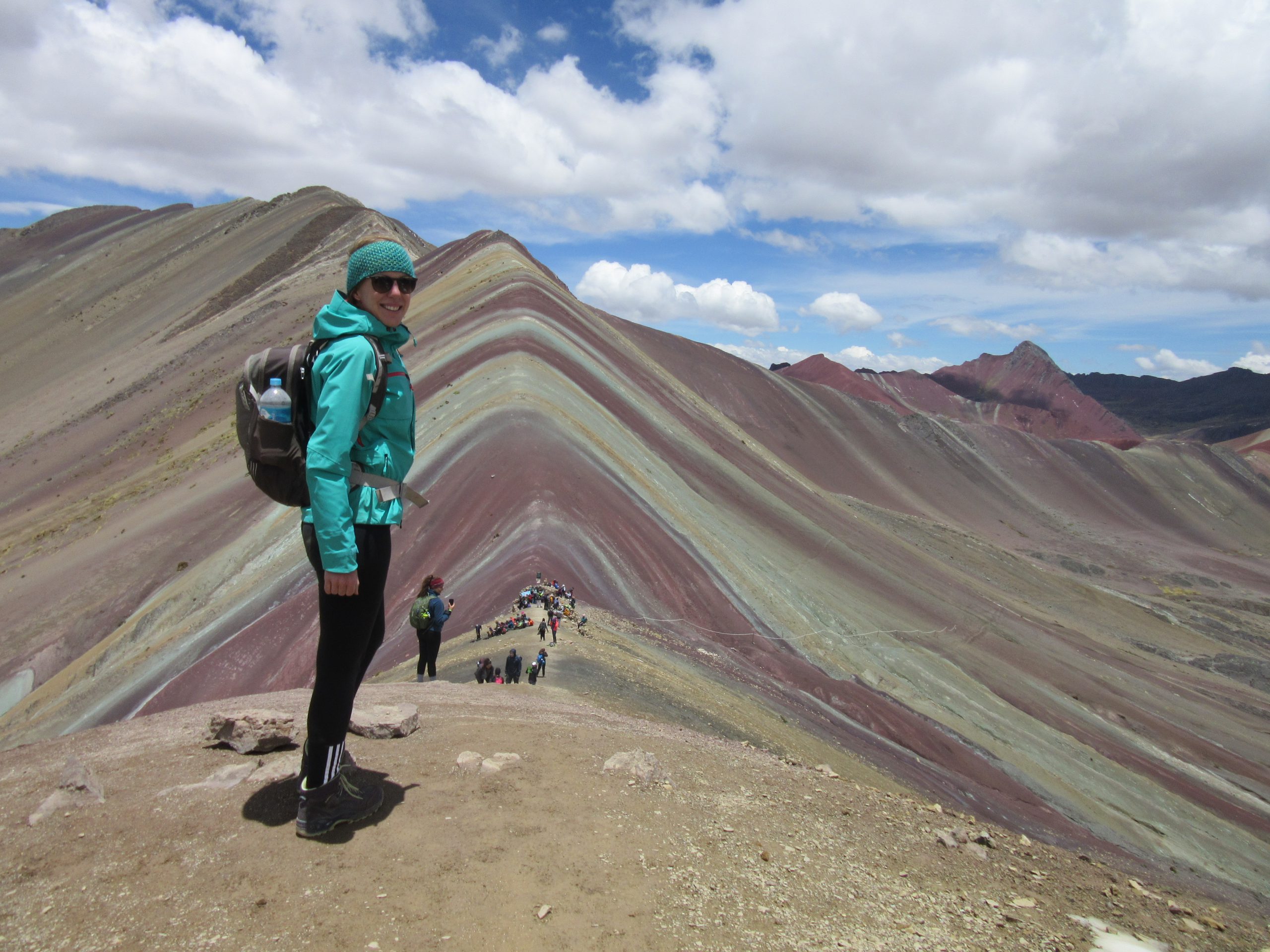
A friendly Peruvian cowboy becomes my saviour. The very last part cannot be done on horseback, so there is still a small climb left. But then—wow. This is what I came for. I’m standing at 5,035 meters. What an unreal view.
Tough, but an unforgettable Rainbow Mountain tour
Delighted to have made it, I take a series of photos at the summit of the mountains painted in vibrant colours. After about 45 minutes, I prepare for the return journey along the same path.
One advantage: it’s downhill now, so much faster than on the way up. But with little sleep and the demanding ascent still in my legs, it remains tough going. Once back at the starting point, everyone is completely exhausted.
We end the tour the same way we began it: asleep in the minibus—but now with an unforgettable experience richer.
2 July 2019: This blog describes the “old” Rainbow Mountain route, which at 12 km was significantly longer than the current 7 km trail. Since last year, this route is no longer offered by any operator, as it proved too demanding for many travellers.
We now offer the “new” route, which is much more accessible and can easily be combined with a multi-day trek from Cusco. More information about this new route can be found here.