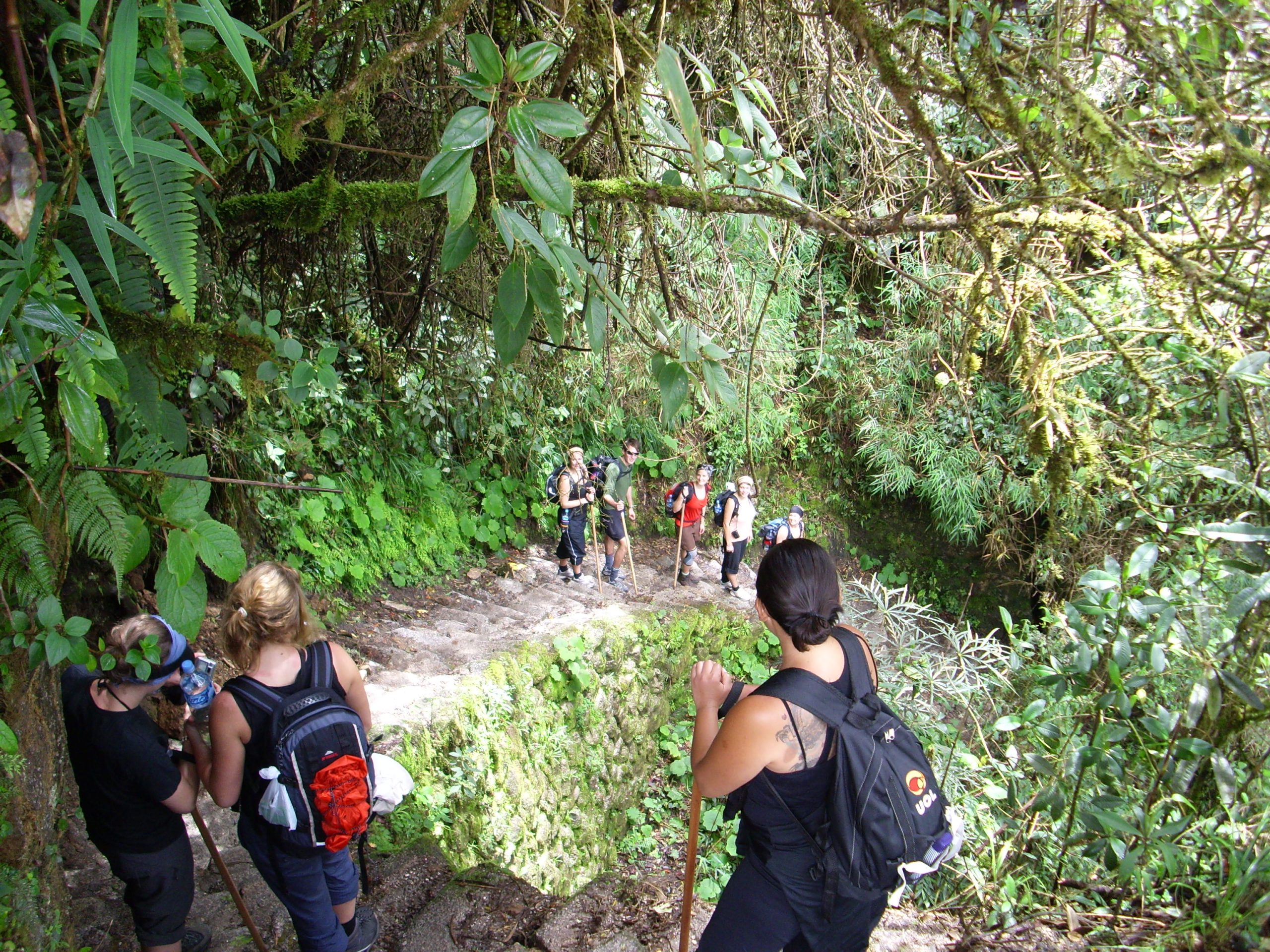
How difficult is the Inca Trail?
Is the Inca Trail difficult? That is one of the most frequently asked questions to Jorge and me. It’s not always easy to answer, because the difficulty depends on many different factors: your fitness level, how your body reacts to altitude, and the weather all play an important role.
To give you a clearer answer, we’ve broken it down for you.
Health comes first
Good health is the foundation for enjoying life—and that definitely applies to hiking the Inca Trail.
If you have no medical issues, the Inca Trail is generally very manageable, even if your fitness level is not above average. If you do have health concerns and are considering the trek, feel free to contact us. We’re happy to think along with you and help you decide what is best. Proper preparation and precautions can already make a big difference.
Jorge has guided people with conditions such as asthma on the trail before, and in those cases, preparation is especially important.
A normal fitness level is enough
The Inca Trail is absolutely doable for anyone with a normal fitness level. By “normal,” we mean someone with a desk job who exercises 1–2 times per week (and yes, that includes myself :-)).
The more you train, the easier it will feel—but don’t worry: the Inca Trail is not a race. If you find it a bit harder or simply want to enjoy the views, there is always time to rest.
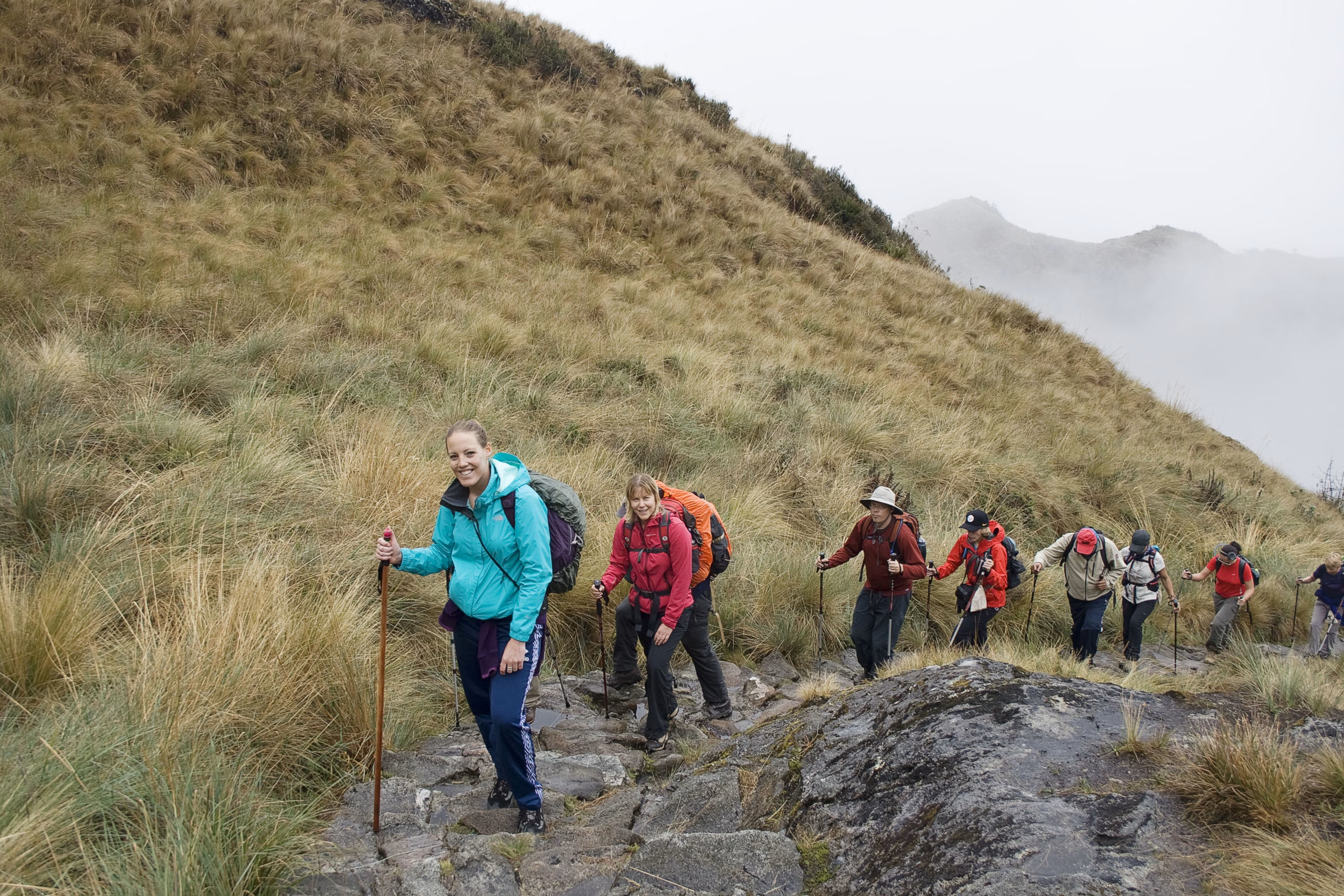
The group walks at the pace of the slowest hiker, and the guide will support those who need a bit of extra help. Prefer to walk at the back on your own pace? No problem—you won’t get lost on the way to Machu Picchu.
The weather: expect everything
My sister recently completed the Inca Trail and when I asked her about the weather, she simply said: “It was jacket on, jacket off all day.” Short, but very accurate.
In one single day, you can experience sunshine, rain (sometimes heavy), mist, and tropical warmth. Clearly, heavy or prolonged rain can make the trek more challenging, especially when you are walking in wet shoes or constantly putting on and taking off your poncho.
While the weather is unpredictable, we do know that the chance of rain is higher during the rainy season (mid-October to mid-April).
The altitude factor
Some people feel fine at altitude, while others experience symptoms right away. Some even fly directly from Lima (sea level) to Cusco (3,400 m) and feel no issues at all upon arrival.
Whether or not you suffer from altitude sickness is difficult to predict—it is not directly linked to fitness or general health, but rather how your body reacts to rapid ascent above 3,000 meters.
Personally, I have never suffered from altitude sickness during the trail or when flying directly from Lima to Cusco. However, I do feel tired during the first two days and sometimes get mild headaches. Shortness of breath is also common for me, which forces me to slow down.
The most important advice: ascend gradually when possible and allow time to acclimatise. A route such as Lima – Arequipa – Puno – Cusco by bus (or partly by plane) works very well. If you do fly directly to Cusco, we recommend at least two full days of acclimatisation before starting the trek.
Preparing in the Netherlands
Because Europe doesn’t have mountains higher than about 3,300 meters, it’s difficult to fully prepare for the Inca Trail. But it is absolutely possible!
Did you know that the trails themselves are not that steep? And for the steeper sections, the Incas built stone steps that are best climbed in a zigzag pattern. That’s also the best way to prepare for this trek: stair climbing. Once you set your mind to it, you start seeing stairs everywhere—at work, in train stations, in shops. So skip the escalator or lift and take the stairs instead!
I do my own Inca Trail preparation at work, where my office is on the fifth floor. That means I climb 10 flights of stairs every day before I can sit down with a coffee at my desk. The first few times I was completely out of breath by the second floor, but now I can even hold a conversation with a colleague while doing it :-). And honestly, I don’t do it every single day. And when it gets tough? Just take a short break—it’s just like the Inca Trail!
Want more tips? Read more on our website about the best preparation for the Inca Trail.
Is the Inca Trail difficult?
In summary, we can conclude: is it difficult? Yes and no. Don’t underestimate it, and make sure you prepare—but there’s also no need to overestimate it. If you have a normal fitness level, are in good health, and have done a bit of preparation, it is absolutely doable. Just don’t forget to bring a poncho—not the free one you once got at an outdoor event, but a proper, sturdy one that reaches your knees.
And then? Hope for good weather—and go for it!