Tips and Answers to Prepare You for Your Adventure
Your guide full of practical information for an unforgettable journey through the mystical Andes. Discover everything you need to know for your ultimate Inca expedition.
Frequently Asked Questions
Find answers to the most common questions about your Machu Picchu adventure.
General
Yes, when booking the Trail, indicate that you want to sleep alone. There is an additional cost of €45 per person for bringing an extra tent.
On the Lares and Salkantay Trails, you will spend the last night in a hostel. By default, you share this room with someone from your group. It is possible to reserve a private room for an additional cost of €20 per person. Please inquire about this when making your booking.
You’ll be traveling in an international group, and you’ll notice the unwritten rule that fellow travelers usually collect tips for the guide, the cook, and the porters. It’s good to be aware of this, and we want to give you a guideline so you won’t be caught off guard—running out of cash can be awkward.
Contributing around €20–30 per participant is definitely sufficient. It’s customary for the group to collect money on the last evening for the porters and the cook. Give it to the cook, and he will distribute it accordingly. For the guide, you say goodbye on the last day, and it’s customary to give a group tip during lunch. So split your tip over these two moments.
Of course, there’s a difference if you’re traveling with 16 people or just 4. As a rough idea, 400 soles is roughly equivalent to €400 in Peru. With €30 per person—or €60 as a pair—you should be able to give everyone more than enough tip.
Children under 18 always receive a €30 discount on the entrance fee to Machu Picchu. So if a visit to Machu Picchu is included in your Trail, you will automatically receive this discount.
For a trip of about three weeks, you could follow this itinerary: Lima, Nazca, Huacachina, Arequipa, Colca Canyon, Puno, Cusco, and the Jungle (Madre de Dios or Manu), then back to Cusco. Optionally, you could travel from Cusco back to Puno and continue by bus to La Paz (Bolivia). We have also written a detailed article about this.
If you have specific questions about your route, please get in touch with us.
The briefing almost always takes place the evening before the Trail begins. You will receive final information from us no later than one week before the start of your Trail, including the time and location in Cusco.
If you already have plans that evening and won’t be in Cusco, we can schedule the briefing two evenings before departure. It is important to attend the briefing in person, as the latest details regarding your trip are always shared. That’s why we schedule the briefing as close as possible to your departure.
We maintain fixed prices for all Trails. These rates are based on a fair market compensation for the local support staff, such as the porters, guide, and cook. The largest costs are train transportation and entrance tickets (together nearly €250), which are the same for every organization.
In addition, all providers charge a margin for organizational costs and for paying the guide, porters, cook, and equipment (tents and sleeping mats, which are included with us). You can trust that for the trips in Peru booked through us, the local staff receive fair compensation, and you won’t pay unnecessary extra costs.
Inca Trails
If you plan to hike the 2- or 4-day Inca Trail and/or visit Machu Picchu, you can also be picked up in Ollantaytambo. This is the last village in the Sacred Valley from where you can depart towards Machu Picchu, so it’s conveniently located along the route.
We have experience with travelers who have diabetes, asthma, high blood pressure, or other chronic health conditions and want to hike the Inca Trail. It is certainly not impossible, but we do recommend discussing all scenarios with your own doctor beforehand. For example: how long could you manage without medication? Will the altitude (and possible altitude sickness) affect your condition? What are the terms of your travel insurance?
Always carry your medication in your own backpack, along with a copy of your travel insurance (including the policy number) and your primary doctor’s contact information. It’s important to note that in life-threatening situations during one of the Trails, helicopter transport to a hospital is always possible, and your guide will arrange this for you.
Of course, we will also provide our phone number and that of a local contact person, so you can reach us in case of emergency. But most importantly, make sure to inform your guide about your health condition at the start of the tour.
Only on the 2-day and 4-day Inca Trail do you reach the Sun Gate. The Sun Gate refers to ruins at a prominent point along the route—it’s the first place where you can see Machu Picchu in the distance. From the Sun Gate, it’s still a 35-minute walk to Machu Picchu.
On the Lares Trail, Salkantay Trail and Inca Jungle Trail, you do not enter Machu Picchu via the Sun Gate. If you hike one of these Trails, at the end of the third/fourth day you travel to Aguas Calientes (the village at the foot of Machu Picchu), and on the fourth or fifth day, you take the bus up to the entrance of Machu Picchu.
Unfortunately, the toilet facilities along the 4-day Inca Trail are very basic and not always very clean. This is because they are located in a remote and protected area.
There is no sewage system and no water to flush the toilets. The toilets are often of the “French” style (squat toilets).
Some toilets along the route are maintained, but not with the frequency you would expect at a hotel or restaurant. So be prepared for this and make sure to bring wet wipes with you, as we also recommend in our packing list.
Along the Inca Trail, you’ll notice significant temperature differences. There is a big contrast between shaded areas and direct sunlight, and it can get cooler in the evenings. Make sure to bring several layers of clothing, including water-resistant layers.
Always have in your bag: good protection against the sun and UV A/B rays. The amount of UV radiation is relatively high in the high-altitude areas of Peru. Even if it looks rainy, always apply sunscreen.
- October to April is the rainy season (rain 3–4 days per week)
- May to September is the dry season (rain 0–2 days per week)
It can happen that you feel fine at the start of the trek but still become ill during the Inca Trail. For relatively common issues like diarrhea, there are simple solutions that often help, such as specific foods—bananas and white rice can be beneficial—and a special local tea that can be made on-site from avocado pits, carrots, beets, and celery. Every cook traveling with the group has extensive experience with these ailments and has their own remedies to help you recover.
If on the first day of the Trail you are unable to continue, unfortunately you will have to leave the group and return to Cusco. You will stay in your hotel until you feel better. Afterwards, you may still be able to join the group at Machu Picchu (at your own expense). We will help you create a plan that suits your situation.
After passing the highest point on the second day of the Inca Trail, there is no way back. Only in emergencies will the guide contact local rescue services, as the only available transport is by helicopter.
Travel well-prepared: if you have specific health issues beforehand, it is very important to travel with your doctor’s approval and with the proper medication. Make sure you are familiar with your travel insurance and health insurance terms, and allow enough time in your schedule for proper acclimatization.
The best time to book the Inca Trail depends on your travel schedule. In any case, make sure to book well in advance—ideally about six months before your preferred date. Good to know: every year in October, central sales open for the following year.
Although you arrive early in Machu Picchu on the last day, you will only take the train back to Cusco at the end of the day (between 3 PM and 7 PM). We choose this option because it is by far the most affordable, allowing us to keep the price reasonable. You will arrive back at your hotel in Cusco between 7 PM and 11 PM.
On the last day, you have plenty of time in the afternoon to enjoy the local restaurants in Aguas Calientes or even visit the thermal baths. If you prefer to take an earlier train back to Cusco, you can usually exchange your ticket on-site at the Aguas Calientes train station for an earlier departure, often for an additional fee.
When hiking the Inca Trail, you won’t be fully reachable as you might be used to. On the first day, you may have signal only in the morning at certain points along the Trail. On the second day, there is no signal at all.
On the third day, you might get a signal at specific points (Puyupatamarka and Wiñay Wayna). On the fourth day, during the final part of the hike and at Machu Picchu, you can use your phone again. The guide carries special communication equipment for emergencies.
Practical
You can leave your backpack at the hotel or hostel. This is usually not a problem, as most hotels and hostels are familiar with travelers doing multi-day Trails from Cusco. Make sure to have a good lock on the zippers of your bag, because although your belongings will be set aside, they are often not under constant supervision.
Trekking poles are always a helpful addition. If your physical condition is good, you don’t necessarily need them.
If your knees, hips, or ankles are a bit weak, the poles can help you maintain stability on uneven paths. In that case, it’s better to hike with poles. The poles we rent are collapsible, so you can easily stow them when you don’t need them. You can reserve them with us in advance.
Preparation
Acclimatization is especially important for the 4-day Inca Trail and other multi-day Trails. Take at least 2 days to rest in Cusco before starting the Trail. If you have already been at high altitude (for example, in Puno), spend a few days there first. Usually, you’ll notice from your breathing and how your body feels that you are at altitude and need to take it easy. We recommend being at high altitude for at least 2–3 days before starting the Trail. You don’t need to be very active to acclimatize—in fact, a slow pace and plenty of sleep are very beneficial for your body.
It’s best to bring a small backpack of 30–35 liters for the Trail. You should pack clean clothes for four days, lightweight slippers, some snacks for extra energy during tough moments, 0.5–1 liter of water, a few toiletries, and good sun protection. All of this fits easily in a backpack of up to 35 liters. Preferably, choose a backpack that allows you to attach a sleeping bag and sleeping mat on the outside—ask at an outdoor store for options. Check our packing list for multi-day Trails for more details.
A sleeping mat is included in the cost of your Trail. A sleeping bag can be rented through us for a small fee, but advance reservation is required.
It can happen that you feel fine at the start of the trek but still become ill during the Inca Trail. For relatively common issues like diarrhea, there are simple remedies that often help, such as specific foods—bananas and white rice can be beneficial—and a special local tea made on-site from avocado pits, carrots, beets, and celery. Every cook traveling with the group has extensive experience with these ailments and has their own recipes to help you recover.
If on the first day of the Trail you are unable to continue, unfortunately you will have to leave the group and return to Cusco. You will stay in your hotel until you feel better. Afterwards, you may still be able to join the group at Machu Picchu (at your own expense). We will help you create a plan that fits your situation.
After passing the highest point on the second day of the Inca Trail, there is no way back. Only in emergencies will the guide contact local rescue services, as the only available transport is by helicopter.
Travel well-prepared: if you have specific health conditions beforehand, it is very important to travel with your doctor’s approval and the necessary medication. Also, make sure you are familiar with the terms of your travel insurance and health insurance, and allow enough time in your schedule for proper acclimatization.
When you pick up your new passport, request your old passport (even if it has holes) back from the municipality. Bring both the old and the new passport with you on your trip to Peru. For the authorities there, it is sufficient that the passport number, name, and date of birth match, even if the passport has expired or has holes. So traveling with two passports to Peru works perfectly.
If you prefer to update your passport number to the new passport, you can provide it to us once free of charge.
Trails
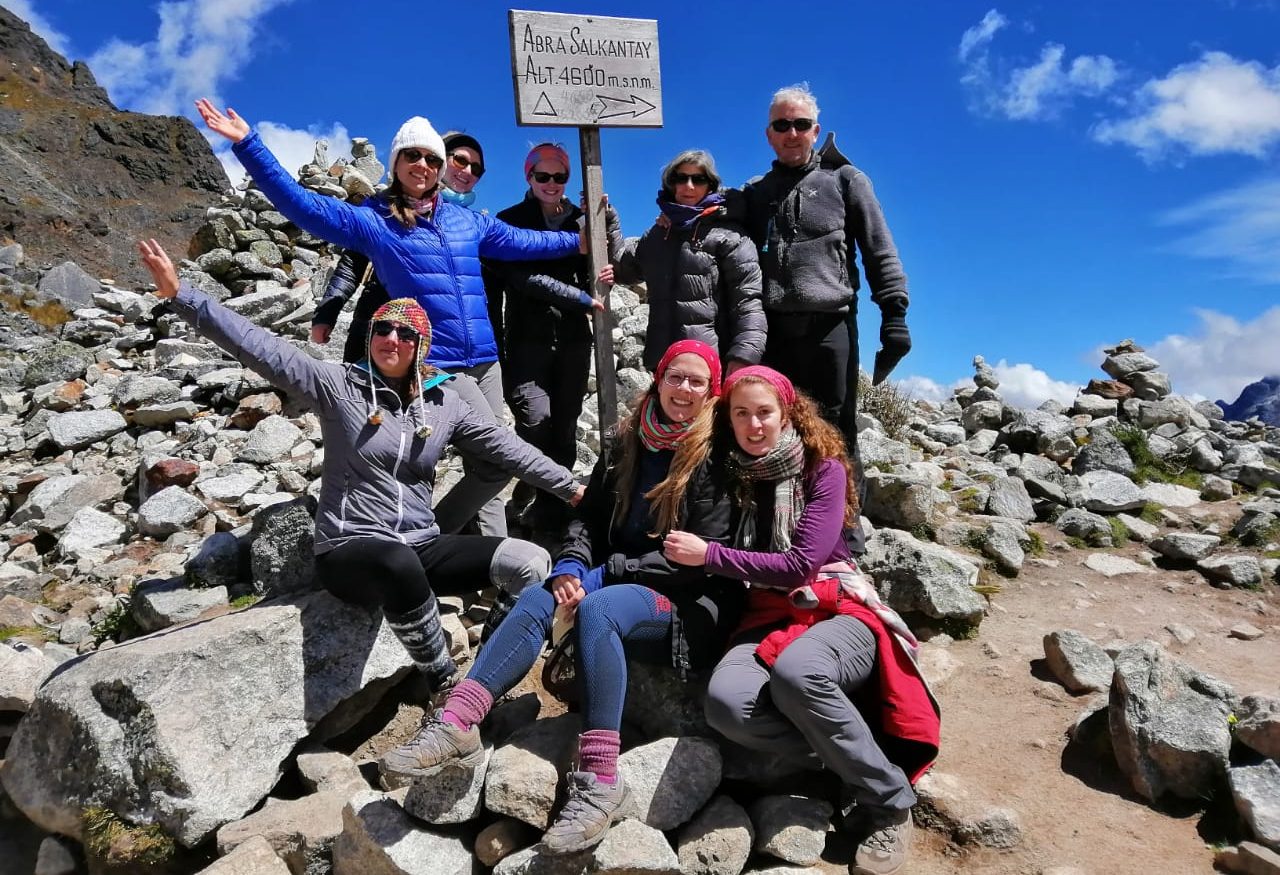
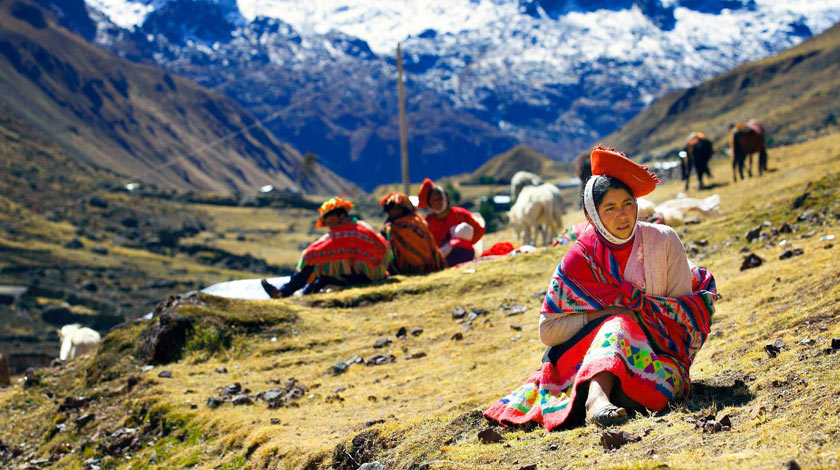
You want to visit Machu Picchu, but how do you get there? The Incas once had only one option: walking the ancient Trail. Today, you can still follow in their footsteps. And did you know there are even more routes leading to Machu Picchu?

Tours & Day Trips
Besides the Inca Trail and a visit to Machu Picchu, you can enjoy a variety of great day trips from Cusco.